/eh/2025-01-08/173633966714069467/picture.png)

/eh/2024-12-24/173503345348979036/Favorite-Icon.png)
/eh/2025-07-08/1751962110204480194/picture.png)
/eh/2025-06-21/1750485478958537574/countryInfoIcon.png)
/eh/2025-06-21/1750485741321434291/Hi-Sign-in-My-Nihao.png)
/eh/2025-06-21/1750485837193896318/cart.png)
/eh/2025-06-21/1750485968202533847/cart.png)
/eh/2025-04-17/1744862476612819675/hot-img.png)
/eh/2025-11-07/1762504524550532584/header-icon.jpg)
/eh/2025-07-07/1751875582852206790/header-icon.png)
/eh/2025-07-07/1751875587886277738/header-icon.png)

Best in 7 days


Shopping security
Series #1 produced in 2023 and limited to 39 pieces.
The exterior texture is rough and raw to the touch, yet sophisticated with very interesting reflections.
The interior is a smooth, pearly white that beautifully complements the green color of matcha tea.
Its spout allows for precise pouring without spillage. It is perfect for realising multiple matcha drinks for your family or guests. This bowl makes it easy to prepare matcha lattes by transferring the matcha to another container.
My favorite detail is the wave shape on the edges of the bowl, which hints at the skill of potter Hozan-san. It's organic and beautiful.

This pouring bowl will allow you to try new recipes and share them with your loved ones.

This artisan matcha bowl from Shigaraki is very special and has a story behind it. Watch this video to get started (3 min):
In this video, I guide you through Hozan-san's pottery workshop. You will discover his creative space, his pieces in production—including our Shigaraki bowls—and his tools.
Click on the play button below to start the video (3 min 50 sec).
A very special technique is used to achieve the rough, "volcanic" appearance of the bowl's exterior. Watch this short interview:
Click on the play button below to start the video (3 min 31 sec).
I returned to view our artisan partner in May 2019. During this visit, bowls from a new series were being made:
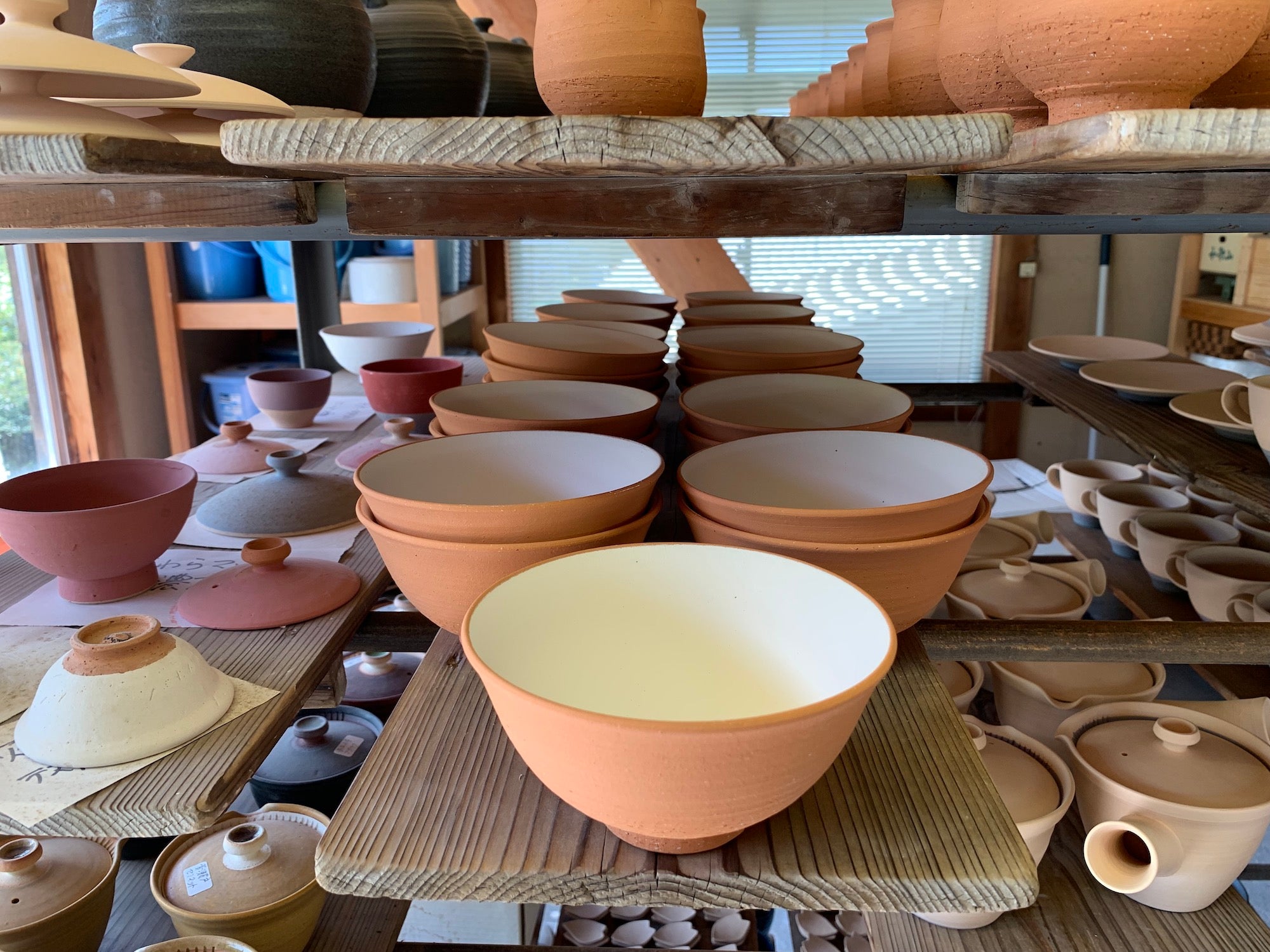
Above are 20 bowls in the "biscuit" stage. Their shape is 30% larger than the final result because they will shrink during the final firing.
They have already been fired twice in the potter's kiln, and you can see the glaze on the inside.
Here is our potter posing in front of his kiln:
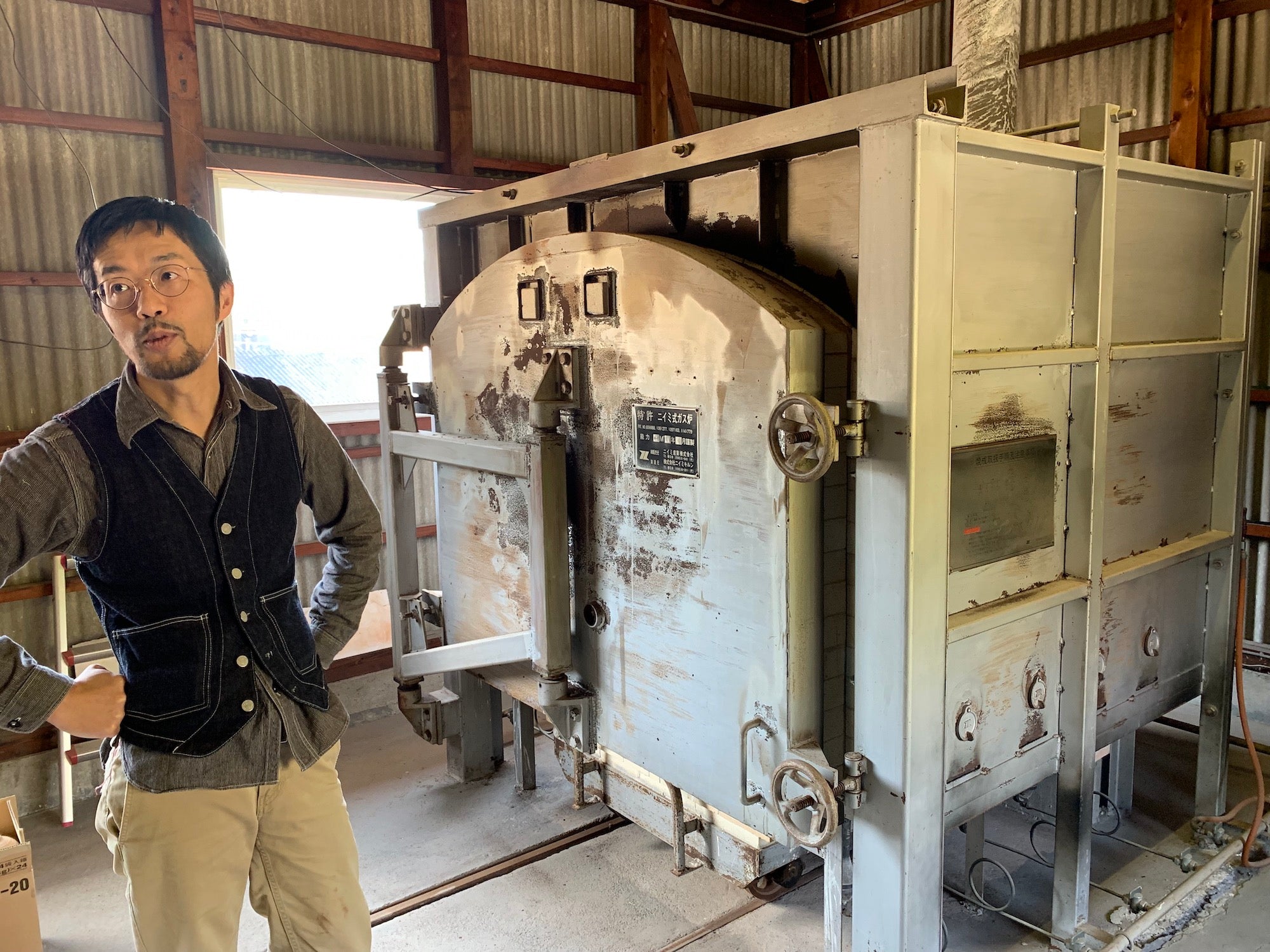
His art has been passed down from father to son for three generations. His specialty is creating small quantities of artisan pieces.
Here he is in front of one of his shelves: he keeps at least one piece of each creation.
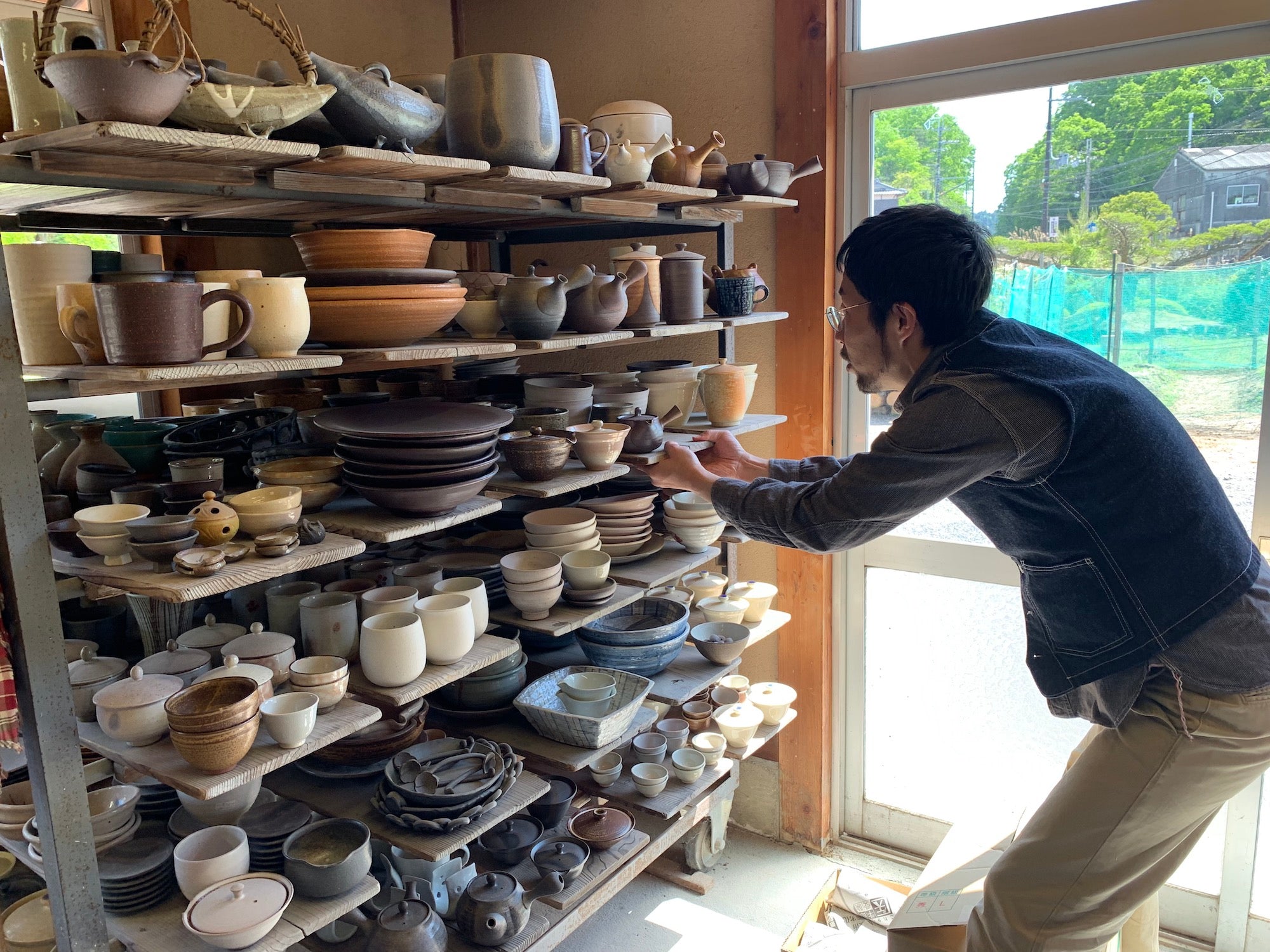
This is what her workshop looks like:
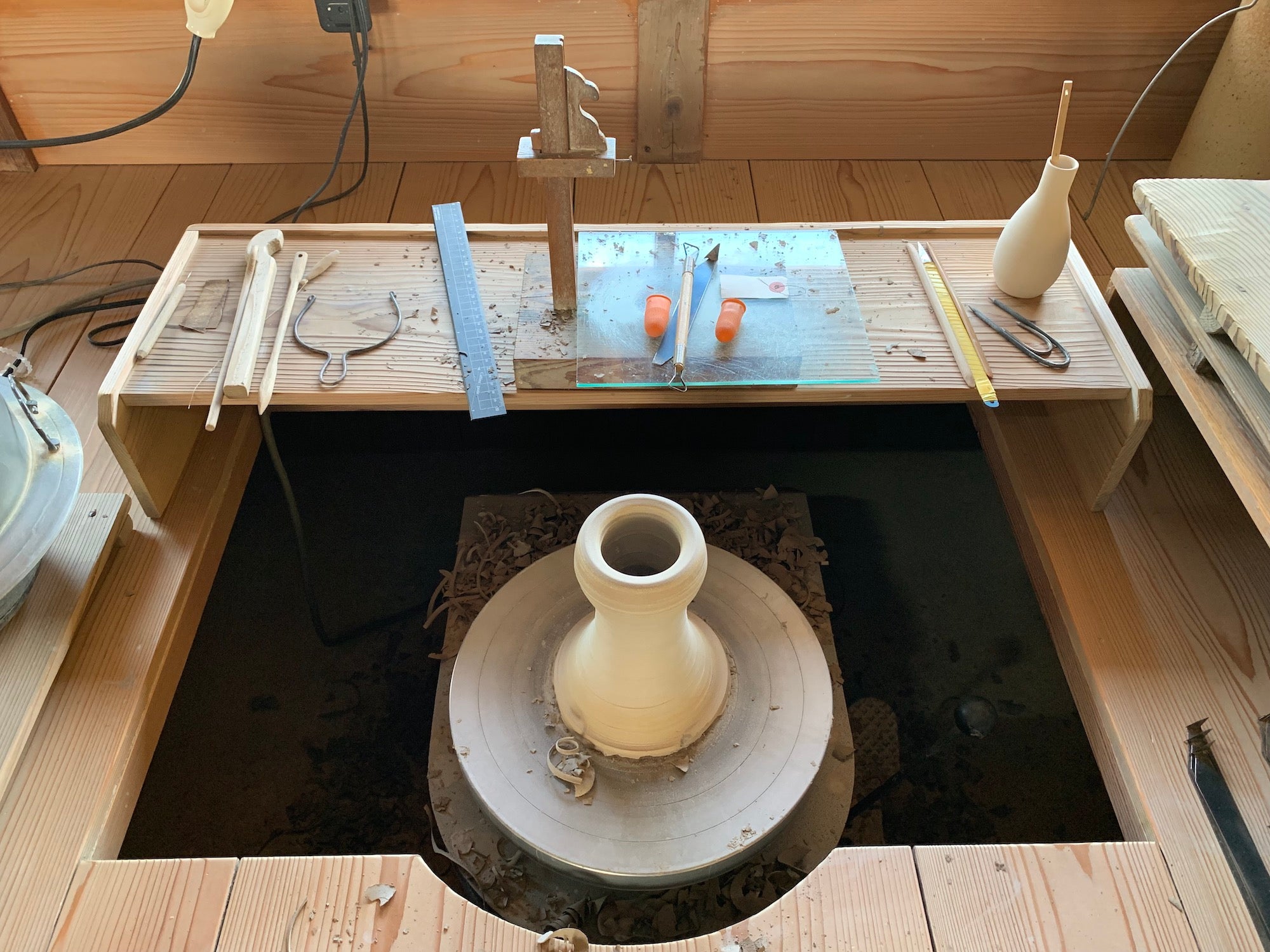
All of his pieces are created by hand using templates that he made himself:
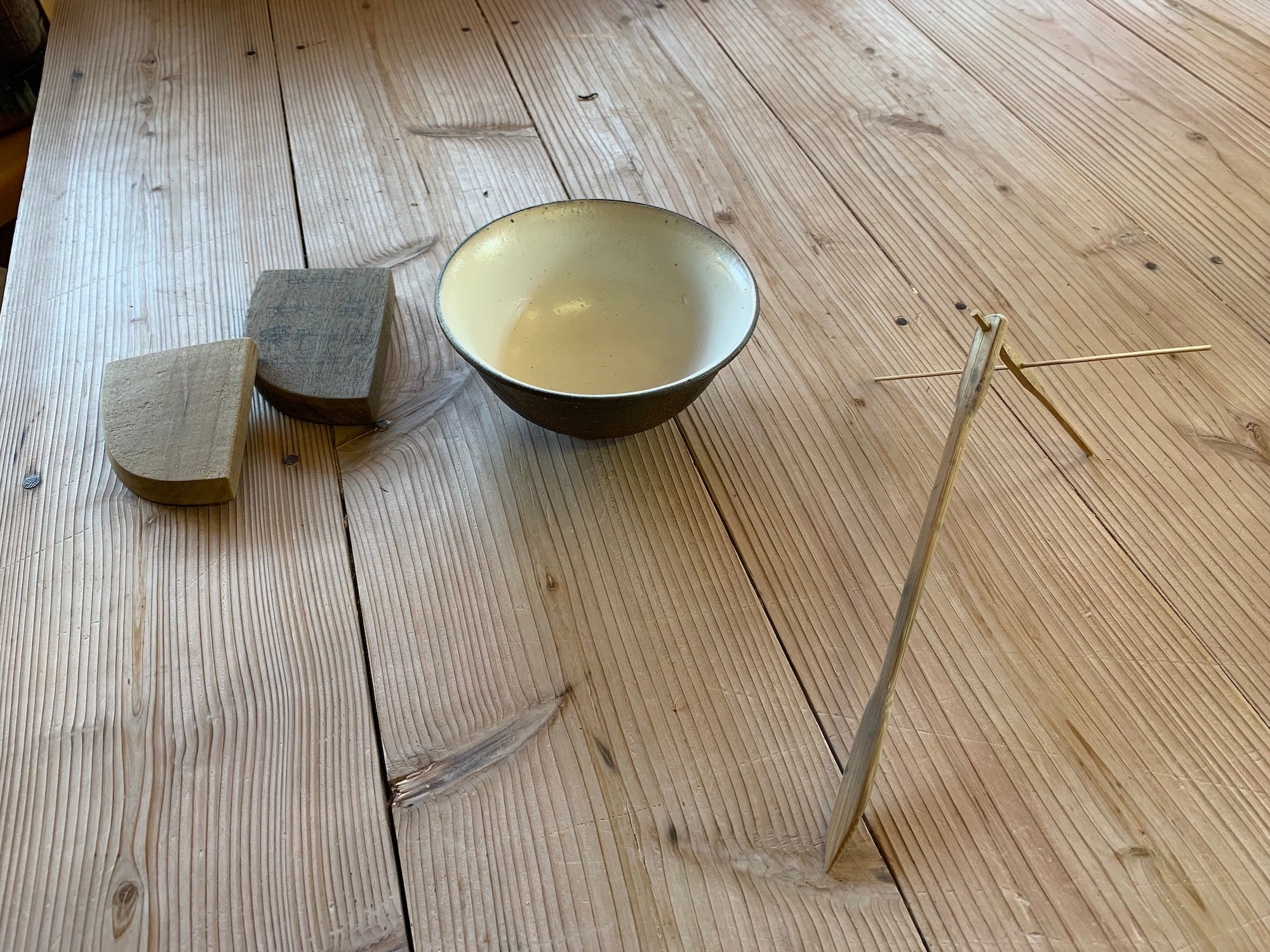
The two curved pieces of wood on the left are used to shape the curves of the bowl. And on the right is a bamboo ruler used to calibrate the height and depth of the bowl.
The artisan nature of these works means that each series will have a slightly different appearance due to the firing and shaping conditions, which always have a semi-random component.
First of all, the material is different: while we use a mixture of soils (clay, marl, silica), most Japanese potters use only clay.
Since we hold the bowls in our hands to admire them before bringing them to our mouths for tasting the matcha tea, great attention is paid to the texture of the bowl and how it transmits heat.
Another very different element is that in the West, we often use a set of identical cups, whereas in Japan, we may have many different cups. Originally, in the tea ceremony, it was the host's responsibility to choose a selection of cups that went well together to please their guests.
Finally, the Japanese find beauty in the "accidental" distortions and irregularities of pottery and its glaze. Wear and tear rounds the edges of bowls and embellishes them. This is the concept of wabi-sabi.
Enjoy the tasting!
Ships within 48 hours · Estimated delivery Jun 20 - Jun 25
US$40
Get nowSign up to your membership to get coupons up to
15%
Get nowOpportunity to enjoy order discount up to 15% off
Top-Converting Item to Boost Your Average Order


